I love sports. Sometimes I have things that I just need to say or have on my mind. This is where I try and put those thoughts into words. Please read and enjoy!
Concussions are certainly nothing new in sports. They've been one of those unfortunate issues that has hovered over everyone's heads. They can diminish a players ability at the very least, if not lead to them giving up the game entirely. Unfortunately, the initiative to remedy this problem has only just begun in a number of sports where it should have started decades ago.
Many have questioned the new kickoff rule, but not the thought behind it.
Of course, sports are dangerous. I don't think their is anyone that could argue that point, but how dangerous they have to be is something else entirely. Every sport has begun to develop safer helmets every year, and they may even force players to begin wearing the helmets, even if they don't like them. I have no problem with that at all. Who care if it looks stupid or feels a little different from what you're used to? The benefits greatly outweigh those points. Another move has been to change rules in the game. The NFL has done that by moving the kickoff 10 more yards so that players can't get up to full speed.
However, I've got a little issue with that idea. I understand changing the rules for safety, but not when it changes the complexion of the game, which this rule did. The first half of this season was all boots into the back of the endzone with no returns. This took away a big part of the game. Now it seems that teams have begun to try and drop the kick as close to the one as they can, but that often just leaves the receiver with maybe a few seconds to move before the kicking team is all over them. The problem is that the guy becomes defenseless and we're back at square one. I could go on, but I'll digress.
This is an image we all hate to see.
While I do applaud some rule changes and improved equipment, I have to wonder why it's only happening now. My concern comes from one story in particular. Sydney Crosby, the star of the Pittsburgh Penguins, has been suffering through a concussion since last season. This is one of the NHL's biggest stars and he's young.
There's my biggest fear right there. No one likes to see a veteran have to go out on anything but their own terms, but if a veteran has to quit because of a concussion then I think the general populace can cope. A real tragedy is when the younger stars have to go through it. These guys are young and healthy and usually go all out all the time. That's begging for a concussion, but we love them for their tenacity.
If we love them so much and want them to actually stick around then maybe it's about time we kick things up a notch and protect the future of our sports. That's all I'm sayin'.
Unfortunately, steroids could be rearing their ugly head once more in baseball. Recent reports are that Milwaukee Brewers outfielder Ryan Braun has test positive for PEDs. I personally hope it's a false-positive. Despite playing in the same division of my hometown Cardinals, and playing with one of the most ridiculous players in baseball, Nyjer Morgan, I actually respect Ryan Braun. I hate what he does to my team every year, but if that's the only thing I hate about him then he's probably alright.
Everyone is hoping that this is a mistake, and we can truly
move on from the Steroid Era.
However, that's not the only reason that I hope he's clean. I'm quite frankly sick and tired of hearing about the failure that was the steroid era. It's not just because it was a black spot on the history of the MLB, but it's just one of those things where you're waiting for the next at-one-time big star to fall due. It's almost to the point of "Oh really? I guess I'm not surprised." when it comes to these announcements. Except, Braun seems to be a little different case.
He's not a particularly big guy, and there don't really seem to be any of those obvious signs that seem to scream "Steroids!" Despite being one of the games best sluggers, I don't think there are many who would honestly have thought Braun would use steroids. If he is, then it shows that the part of the steroid era has crept into some of this era's younger stars, and that's something that no one wants to see.
Here's an interesting piece from the New York Times that puts a little bit of all this into perspective.
Albert Pujols is walking away from the only team he's ever known. The name in the picture above seems to be the only one that matters to him. More than ten years of success, ten years of being competitive, ten years of praise from the games greatest fans and it all means nothing.
Pujols always said that the name on the front of the jersey was more important than the one on the back. He's mentioned taking a "home discount" in order to keep the team competitive in the past. Apparently, that's changed recently.
The Cardinals would have been ready to easily pay him more than his teammate Matt Holliday, but Albert simply wanted more. He's let his own legacy take over everything he had ever said before about the game or the team.
It started when talks ended before spring training. You could understand some gap between club and player, but it seemed more like a chasm. However, that only adds to the reason that it would have been great to see both sides come together. If taking those leaps weren't daring and impressive, why would we even care who Evel Knievel was?
Either side could have taken a leap, but neither did. Both sides have rights to blame, but most of it is on Albert because he only has to worry about his own money. The Cardinals have to look out for the organization as a whole, while trying to stay competitive year in and year out. However, something seems to have changed in Albert.
Character
Albert has always been regarded as a player of character. He's been respectful and often humble in the way he went about his business. However, last spring seemed to subtly hint at something we didn't want to believe. The subtleties continued during the season while he was struggling. He would call out reporters that questioned his abilities and was quick to point out his body of work in the past. That doesn't seem to be all that humble.
We all know what he's done, and quite frankly shouldn't have worried about him this season, but when he's almost becoming his biggest promoter it once again points to something that fans don't want to believe.
Could Albert Pujols be a sellout? It's possible. We have yet to hear from Albert since his signing, and he did supposedly turn down a $275 million deal from the Marlins, but we can't exactly say it was for chump change either.
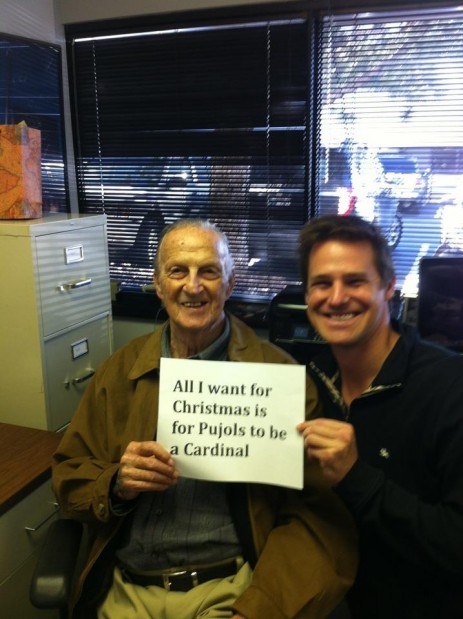
Even Stan "The Man" wanted Albert to stay.
It's not just the money that is going to hit fans the hardest, because, let's face it, that's a LOT of money. But the other problem is how different Albert has behavedthe past year .
Spring training and his performance during the year were mild indicators, but his signing has put Albert Pujols in a terrible light.
He has talked for so long about wanting to finish his career in St. Louis, about wanting to try and be like Stan "The Man" Musial. When did that pure and goodhearted wish become overrun by a greed for money and his own fame?
He's always talked about how great the Cardinal fan base in St. Louis and beyond has been. Does he think that Angels' fans will be better?
What has changed Albert thoughts on these things? Or have they not changed at all, and Cards fans have simply been strung around for years?
Business
From a business standpoint, the only ones who completely foolish are the Los Angeles Angels of Anaheim. They're putting a ridiculous amount of money into a player that won't be worth that much come the second half of the contract. They're dollar amount only makes sense in the mind of Albert Pujols, who's the biggest winner of them all.
The Cards stood their ground. They knew how much would be too much to compromise the TEAM. They understood how much was too much, in fact they were probably the only side that did.
For Albert, he got what he wanted; a monster contract that would assure his playing into his 40's.
It's easy to call out Albert in this whole state of things, partly because the only thing to defend him is the sheer amount of money, but how he responds to the criticisms could determine who he is in the eyes of Cardinal Nation.
Many will be able to get past this day, and I'm sure many will join me as I give him his well deserved applause if he makes it to St. Louis. He's done so much good for the city and the team that he deserves at least that much, but how he handles things going forward will determine how much of that respect he'll keep.
The Cardinals were riding high. They were doing flips and turns with chants of "happy flight" and "do it for Torty." The champagne and beer was flowing, spraying, and soaking deep. They had battled daily for a playoff spot for a month straight. Every moment built up tension and pressure that was released along with the champagne on that Wednesday night.
The team was full of a joy and elation as if they had just won it all. That may might not be far from the truth. They had won against doubt, won against fear, and won against the odds.
Though, now the odds were once again against the Cardinals. Their Wild Card title earned them the right to play the NL East Champ, Philadelphia Phillies, whom many considered the best team in baseball.
Of course, that same team had lost to the Cardinals in 6 out of 9 meetings during the regular season. So, why should the Phillies be favored in a best of 5 series? Well, that tells you how good they are right there. The Cardinals were one of the hottest teams heading into October and they had Phillies number during the season, but it's hard to count out the Phillies.
They've got one of the best starting rotations in baseball history and a dynamite offense. They could shut-down and blowup any opponent. They showed some of what they could do in Game 1 of the NLDS.
Aside from one mistake in the first that surrendered a three-run shot from Lance Berkman, Roy Halladay allowed only 3 hits over 8 innings. He finished the game with a streak of 21 straight batters retired. The offense lifted him to a victory with 11 runs to give him and the Phils an 11-6 victory in Game 1.
The first four games became a back and forth match between the two teams. Games 1 & 3 went to the Phillies, and Games 2 & 4 went to the Cardinals. In that game four one of the more bizarre happenings in a postseason occurred. What happened spurred t-shirts, signs, and even a second mascot for the Cardinals, the Rally Squirrel.
In the fifth inning, Roy Oswalt delivered ball to Cardinal second baseman Skip Schumaker. As he did so a squirrel darted right in front of home plate. The critter immediately high-tailed it to the stands nearby. A squirrel had also been found on the field the day before, but this time it decided to be right in the middle of the action.
The Cards were leading at that point in the ball game, and would eventually win it. However, that one event joined another member to the ever growing St. Louis Cardinal Animal Kingdom. In the previous months, the pet tortoise, Torty, of Cardinal Allen Craig began to have a following in the clubhouse. Torty would later have his own Twitter account, which now has a following of more than 21,000.
At the rate the Cardinals are going, they may have to open a petting zoo in the vacant lot outside Busch Stadium.
In the end, however, no critters would overshadow what would happen in Game 5. It was touted as one of the best postseason matchups, Carpenter versus Halladay. Two Cy Young award winners would compete in the deciding Game 5 of the NLDS.
As both friends and former teammates, the two aces would provide a nail-biter for postseason lore. Halladay was tagged for a triple and a double in the first that scored one run, just one. That would prove to be the only difference for the night.
Halladay gave up 6 hits, Carpenter gave up 3. Halladay had 7 K's, Carpenter had 3. Halladay allowed one run to score, Carpenter allowed none.
Every throw, every swing threatened to change the complexion of an entire season. Through it all, Carpenter was the better pitcher that night and the Cardinals took advantage of it. That will make for a fun conversation on the old fishing boat with his friend Halladay in the offseason.
Matt Slocum/AP
Of course, fans won't forget their favorite critter making an appearance in Philly as well.
So, one might think that after eliminating the best team in baseball that things would get easier for the Cardinals. Not really. Now they had to face the second best team in baseball, and it was a team that they knew all too well.
The Cards had split the season-series against the Milwaukee Brewers but were left behind in the standings as the Brewers finished the year 6 games ahead of the Cards.
The season had also revealed a lot of angst between the two teams, particularly from Nyjer Morgan, a.k.a Tony Plush.
However, despite the tempers of the regular season, the October air did well to cool it off in the postseason. The series was uneventful from an altercation standpoint, but the games were anything but.
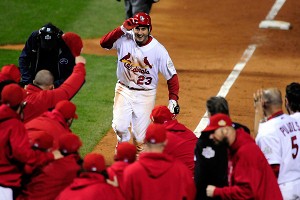
A very familiar walk to all of Cardinal Nation in the Postseason.
Matt Slocum/AP
The Cardinals averaged over 7 runs per game, due in large part to 12 run contests twice in the series. What was the real story of the NLCS? Tony LaRussa.
Well, that's not entirely true, he was half of the equation. His bullpen was the other half. The bullpen had done a fantastic job in the series against the Phillies, and they would need to work their magic again for Tony with the starters faltering.
Jason Motte, the Cardinal closer that is not the closer, only allowed one hit in the 2011 postseason by the end of the series against Milwaukee, but that one hit came against the Phillies.
It became a strange but regular dance for the Cardinals. The starters would last three innings, LaRussa would make all the right moves, and the bullpen would shut down the opposition. The combination of bullpen and managerial genius would be a huge part of the Cardinals' success. Some wished that the MVP for the series could be given to the bullpen. That sentiment was shared by the one who would be voted the NLCS MVP, David Freese.
Of course, he had given his share of big time hits that helped to give the team the leads that the bullpen held. He had been the clutch player for the series, and the nation was getting their first tastes of the budding star.
Freese hit .545 in the series with 3 home runs and nine RBIs. Only Lou Gehrig had similar numbers in the postseason, when, in 1928, he hit .545 with 4 home runs and nine RBIs against the Cardinals.
With the Brewers behind them and the MVP sorted out, it was onward to the Big Stage. The Cardinals would face off against the Texas Rangers, who were making their second consecutive World Series appearance.
The strangest part of the series was the similarities of both teams. They were nearly identical matches. The greatest similarity was how the bullpen had carried the teams to this point, and ironically this would change for both teams.
Neither bullpen was lights out in the World Series. Both struggled to find the same rhythm they had earlier in the post season.
US Presswire
In at least one game, however, the bullpen of the Cardinals was able to take a backseat and watch the show. That show centered around Albert Pujols and the offense. Albert decided to have one of the greatest offensive games of his career in Game 3 of the World Series.
Pujols had 3 home runs, 5 hits, and 6 RBIs which tied the postseason record for each. He also set a new record for the most total bases in a game with 14. He joined pretty good company that night with his three home runs, one of which was a moon shot off the second deck. Only Reggie Jackson and Babe Ruth had hit three home runs in a single post season game before Pujols. Ruth did it twice against the Cardinals in the 1920s.
The historic nature of that night would only be matched by what happened in Game 6, or at least the end of it. The majority of the game was full of miscues and errors and succeeded to pent up the frustration of Cardinals fans. Some completely gave up hope and called it a night, some might periodically check back in with little hope for the end, but if you missed the last three innings then you missed something special.
Going into the 9th, the Cards had managed to scratch back up to within striking distance of the Rangers at 7-5. The Rangers put in their closer Neftali Feliz to win the World Series for them, but the Cardinals would give in. Pujols hit a one-out double to left-center and was followed by a Lance Berkman walk. Allen Craig, the hero with a solo shot in the previous inning, struck out looking. So, it came down to David Freese.
Freese had already shown that he was clutch in the NLCS, but could he do it again? Freese would find himself down to two strikes against Feliz. This was it. Two strikes, two outs, the Cards seemed finished, but Freese cracked a triple over the glove of right fielder Nelson Cruz to tie the game.
The Cards had new life, but the Rangers were hungry for the win and Josh Hamilton wanted to contribute. In what could have been a Hollywood moment for the Rangers, Hamilton launched a two-run shot in the top of the 10th that seemed to almost seal the deal for Texas.
When the Cards took to the plate in the bottom of the 10th, they decide to manufacture runs after two singles and a bunt. However, once again they would be down to their last strike, and this time it was Lance Berkman that drove in the tying run on the brink.
Jeff Curry/US Presswire
After a quick top of the 11th, it was time for the Cardinals to capitalize, and it didn't take long. The first batter was the October hero, David Freese. He wasted no time in rewarding the 47,000 strong at Busch Stadium with a 428ft shot to straight away center field to send the series to Game 7. Only minutes after dropping an easy pop fly, David Freese had more than redeemed himself.
To Cardinal Nation, the Red Birds seemed invincible. They had made one of the greatest comebacks in postseason history, no team had won after being down to their last strike twice. Of course, that confidence had been with the team further back than just the postseason. Without confidence in their abilities, no team could do what the Cardinals had done to that point. Now they just had to seal the deal.
The Cards were prepared to do it. With an extra day due to postponing the original Game 6, the Cards could put their ace on the mound one more time. He delivered just as advertised. He didn't need another nail-biter like in Philadelphia, but he was more than enough.
Carpenter gave the Cardinals 6 strong innings, the offense scored more than enough, some good defense was mixed in, and the bullpen closed it out. A full team effort clinched the St. Louis Cardinals' 11th World Series, second only to the Yankees in the majors.
The improbable never let up for the Cardinals, and neither did they. Perseverance and confidence defined the team in which few had faith. They capped one of the greatest comebacks in baseball history, and turned the 2011 season into one hell of a ride.
A nice montage of the Cardinals improbable 2011 World Series run.
For a Cardinal fan, the last week has been a roller coaster of emotion that might have given some a case of whiplash. Oh wait, the last two months have been that way.
Of course, if this were a real roller coaster, we'd have looked at the beginning of the ride and demanded a refund. There might have been some small ebbs and flows to start, but about halfway through it seemed to slowly decline with little hope for going back upward.
NBC Sports
Backing away from the metaphor for a moment, everyone knows the major blow the Cardinals received before the first Spring Training game. Losing one of your pocket aces, Adam Wainwright, before the first hand would dishearten any team. The Cardinals, however, pressed on putting the best they had on the table.
Of course, they had to mix and match with their pitchers and hope the end result could at least be satisfactory. Let's face it, the first half of the season was full of experiments and hope. Kyle McClellan had never started a Major League game before 2011. He made the most sense to start, within the organization, but it was still a long shot.
Then there was the signing of Lance Berkman. At 35 years of age, Berkman had come off his worst season since he began his career. According to Baseball-Reference.com, Berkman's batting average, home run total, and RBI totals from 2010 were only better than his numbers in his first year back in 1999.
Granted, he did switch leagues during the season, not just teams, but age was certainly on everyone's mind as well.
However, health remained the biggest factor of the St. Louis season. After Wainwright was out, Fans couldn't have imagined things getting much worse. Unfortunately, they did. Matt Holliday missed a ton of games because of anything from an appendectomy to a wrist injury and even missed the end of a game because a moth flew into his ear. Yikes. He missed 38 games during the regular season, and I don't think most of those were because he just needed a break.
The Cards got few breaks for themselves. On June 19th, against the Royals, all of Cardinal Nation made one unified gasp as they saw their star go to the ground in pain on collision at 1st base. If anyone was going to carry their team through the tough times, it was going to be Albert Pujols. Now, it seemed like all hope would fade away when news came that he would miss 4-6 weeks.
Everyone knows that Pujols is super-human, but no one thought he could recover as quickly as he did. After the minimum 15 days on the disabled list, Albert was back on the field to put the St. Louis Cardinals on his massive back once again, even amongst the multitude of injuries that continued to plague the Cardinals.
Some fans couldn't believe
what the bullpen was doing.
One thing Pujols couldn't carry on his back, though, was the Cardinal's bullpen. The bullpen struggled in the beginning with blown save after blown save by Ryan Franklin, and on June 29th the Cardinals decided they had had enough. They cut Franklin from the roster altogether to make room for newcomers. Franklin lost the closer role early after a slew of blown saves, and he finished with an 8.46 ERA in 2011.
So, the ride was falling downward and maybe even beginning to spiral a little bit. Many fans had lost or were losing hope for the season. That's something especially rare for a fan base that is rarely out of contention and has such a rich history of winning. However, the trading deadline proved to be new life for the Cardinals. By July 31st, the Cards had sured up their bullpen with Marc Rzepczynski, Octavio Dotel, Edwin Jackson, and later claiming Arthur Rhodes.
Things were finally starting to fall into place, or were they? The Cardinals only won 15 of their 28 games in August. Be that as it may, an important date fell during that month, August 25th. That date in the regular season will be remembered as the beginning of one of the greatest runs in baseball history.
The Cardinals were 10 1/2 games behind the Atlanta Braves in the Wild Card, and with the Brewers continuing to roll it looked liked the Cardinal coaster was about to turn toward the end. However, on August 25th the cars went into another gear along the track. The Cards went on to win 23 of their last 32 games from that date on. Including a huge series against the Braves that they swept.
The 1969 Mets found winning ways.
The improbable was becoming more possible with each passing day. However, the goal was still in the distance and still a long shot. Hope was beginning to rise, but skeptics still held the majority. Only the 1969 Mets came back from that kind of deficit. The Mets were 9 1/2 games back of the Cubs in August. They won 39 of their last 50 to win the NL East division by 8 games.
The 2011 Cardinals won 31 of their final 50 games, but they couldn't blow past their competition. Every game leading into the final week grew heavier and heavier with importance. The Cards were inching closer and closer. The work of nearly seven months was coming down to the wire.
In fact, it almost came down to a 163rd game playoff against the Braves, but the Philadelphia Phillies would help bring the Cards to the post season by defeating the Braves in an extra inning affair.
The practically impossible had happened. The Cardinals had crawled up from hopelessness to hopefulness. They now had their sights set on a showdown with the Phillies. They were going to play the team that helped them into the playoffs. The team regarded by many as "the best team in baseball."
Tony La Russa knew what lied ahead, and he was ready...
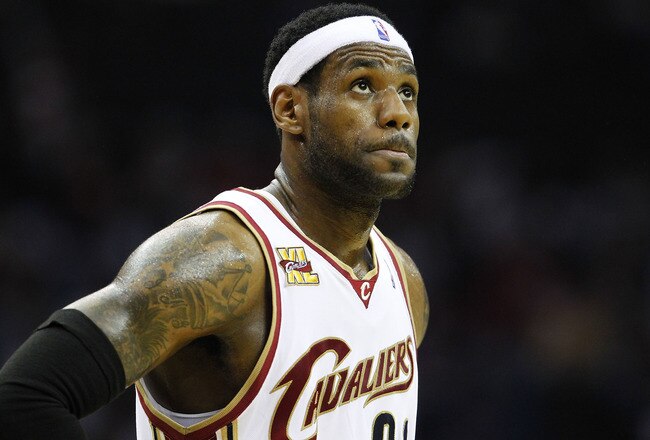
Speaking with a friend the other day, we were on the topic of LeBron James and we got onto the topic of whether athletes should jump right into a professional career or take their talents to college. This, of course, has been a topic in athletics for years now, and is a part of the debate for paying college athletes which I'll discuss at a later date.
Let's start with going to college. What are the advantages to going to college? There are quite a few. The first is what most seem to forget when discussing college athletics, education. Most people go to college to get an education that will help them be better prepared for the rest of their lives. And I'm not just talking about those boring elective classes that teach you how to grind through long, boring meetings that seem to drag on forever. What I'm more concerned with are the lessons learned that have an impact on the everyday.
In college, you understand that you are part of a bigger picture of things. Whether that is because your university is literally bigger than you or because you realize the importance of teamwork and working with others. You meet a number of characters in college and each presents you with the opportunity to learn how to handle different people. YOU GROW UP!
Now, I don't want this to be simply a Lebron bashing, because that's a band wagon that's easily ridden, but also because I don't have a huge problem with the man himself. He's made some bad "decisions" this year and beyond, but he is still a nice guy with a ton of talent.
Some call Bryce Harper "The Chosen One." Chosen to do what?
Basketball is not the only sport with this problem, Baseball might be even worse about the number of kids that sign with teams right out of high school, or at least at a young age. The Washington Nationals Bryce Harper is an example of this point.
In my mind, both he and James are still kids that still thinks that the world revolves around them and they can get away with what they want. Harper has already been ejected from a number of games in his brief minor league career, and how it happens just demonstrates how much of grown up he has become. His antics don't always get him ejected but they are bad just the same. Whether it's drawing lines in the dirt, spiking his helmet, rushing the approaching dugout, or blowing the apposing pitcher a kiss, Harper still thinks that just because he signed the big contract that he is a big deal.
Harper hasn't even proven that he can play in the big leagues yet, and James chokes under playoff pressure. I don't think there is any doubt that both of these guys are tremendous athletes, but there comes a point where you need to bear down and just do your job.
It's certainly painful, but do they always recover?
But let's pretend that an athlete is not full of themselves and won't get the billion dollar contract. Why should they go to college? The same reasons still apply, because no one graduates high school fully mature. In addition, let's look at the assurance of athletics: none. An athlete can brake their leg or tear a tendon or any number of injuries. If nothing else, injuries can diminish an athletes skills if not completely end their career, and this can happen in an instant at any time. This is the danger of sports, and what do the athletes have after that? Some get into broadcasting, which is hit or miss, but otherwise they can fall off the face of the earth.
A sports career can last, typically, 10-20 years at best, and then they live off their name. But if you don't end up making a name for yourself then you are back to square one. A college education is something that lasts a lifetime and will always leave options in the future. It's just a safe bet and makes sense.
The biggest potential wrench for an athlete becomes affording for college. Some institutions provide full-rides for athletes, but not all do and not all athletes get them. Money is a big player in athletics, and college athletics is no exception. But that's for another time.
Like I said, I know these aren't the only two guys, and I also know that college isn't a complete fix. Some have attended college but still have issues. And there are those who haven't gone to college, have a ton of talent, and still have respect for the the game and their opponents. Atlanta Brave's Jason Heyward is the first to come to mind. He's playing for a contending team and has been a pretty good addition for them.
However, when it comes down to it college is a valuable asset to anyone, and athletes need an education as well. They need to learn how to handle relationships. They need to learn how to handle being on their own. They need to learn how handle life "in the real world," where the world is bigger than them.
Has professional sports lost something in recent years, is it fading away, or is it simply not the norm any more?
How athletes and coaches act nowadays has become a farce of what it was once. Showboating and smack talk have become part of sports whether we like it or not. However, there are some things that are hard to put into words but you know are just plain no-no’s.
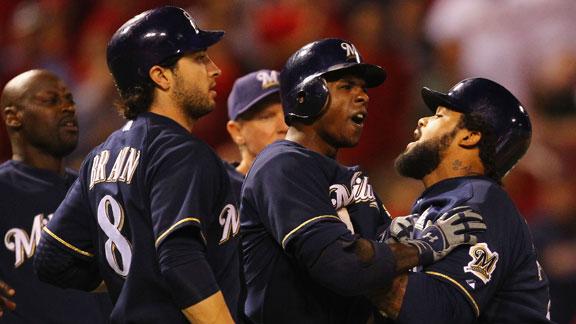
Nyjer Morgan (center) being held back by
teammate Prince Fielder (right)
The recent spat caused by Milwaukee outfielder Nyjer Morgan, or Tony Plush or whatever personality decides to drop in, is just a recent example of some of the unprofessionalism in sports today.
Morgan has had a reputation for getting into trouble, most notably last season when he was suspended for 8 games for a number of incidents as a member of the Washington Nationals.
Those incidents, unfortunately, seemed to typify Morgan’s behavior during play, but his actions beyond play are not much better. His public disagreement with his manager would be an example.
For a long time this season it appeared as if Morgan was beginning to change some of his ways. However, that ended this week with the incident against the Cardinals.
According to Chris Carpenter, Morgan had been running his mouth for the past couple of days.
"Every time, every time. When he hit that double he was screaming," Carpenter told MLB.com, referring to a hit earlier in the game. "Yesterday he screamed, a couple days ago when he hit that ... Which I don't mind. Do whatever you want. But when you strike out like that and try to throw the chew (at) the mound to our pitcher and yell? Come on, man. You need to be more professional than that."
In the video, Carpenter had a chance to say two words at most before he turned around. So, in Nyjer Morgan’s mind, his couple of days of mouthing off wasn’t as bad as Carpenter’s two words?
In an interview after the game, Morgan didn’t seem to think that he could be at fault for any reason. But if what Carpenter said is true, then how could he think that? That is unless his actions are becoming the norm of sports.
This would be an unfortunate turn for sports to take. It’s one thing to be competitive, but it is another thing entirely to be a nuisance or conceited.
For instance, I don’t mind barreling into a catcher as long as it necessary and it’s the only way to get to the plate. However, running your mouth every time that you do something just lacks class.
Trust me, Nyjer. You wouldn't
want Albert in the ring.
Morgan also extends his personalities past the diamond. He does have his own twitter account, which some might find entertaining, but sometimes it’s misused. An example would be his comments about Albert Pujols after the altercation the other night.
"Alberta couldn't see Plush if she had her gloves on!!! Wat was she thinking running afta Plush!!! She never been n tha ring!!!"
I’m sorry but let’s look at this practically standpoint. Albert has 3 inches and nearly 60 pounds on Nyjer! Not to mention that most of that difference is muscle. I’m not boxing expert, but I’d say that the chances fall in Pujols’s favor.
Now let’s compare what they’ve done in their careers, to see who “deserves” to smack talk. Pujols has a .328 career average versus Morgan’s .289 average. Morgan has 8 career home runs. Pujols hits 8 home runs in a month. Pujols has 3 MVP Awards, while Morgan has none. Pujols has a World Series ring, and Morgan, apparently, has been in a boxing ring.
So, I think it’s safe to say “What were YOU thinking?” Fortunately, for Morgan, he’s picking a fight with a guy who is least likely to retaliate. Albert will let his bat and baseball glove do the talking for him, rather than get in twitter fight with “Tony Plush.”
Morgan also seems to lack an ability to be humble. So, when he’s on a team that actually can win games and go to the playoffs, something his former teams were unable to do, he feels the need to boast about it. In the interview after the game, he brushes off his behavior on the fact that the Brewers are in first place. His personal sense of superiority absolves him any problems that come up.
Nyjer Morgan is certainly not the only player in baseball, or sports in general, that acts this way, but it’s unfortunate that we even have to talk about these guys.
The true professionals are the ones who let their play do the talking. Those who only know how to bark loudly are the ones that should be heard the least. Both Pujols and Carpenter have handled this better than Morgan, and they are far better than I in allowing some leeway for Morgan's shortcomings.
I don’t know if this is a surging trend among athletes or if it’s an unfortunate smear in our era of sports.
Either way let’s hope that these bad habits won’t continue into the next generation of professional athletes.
By now we've probably seen/heard about the call made at the end of last night's Pirates vs. Braves game, and we've likely already came to some conclusions on what we think the call should have been. With that said I'll only briefly cover that part.
Hit and Missed
For those of you who don't know or need a refresher, here's how it all went down. First, this play should not have even been made an issue if the Pirates catcher, Michael MnKenry, had simply made more solid contact with Julio Lugo. It was not really a potential collision, so he wasn't it eminent danger, and this isn't like the second base foot swipe that we see so often. This is home plate! In that situation your job is to guard it and make sure that the runner doesn't score. That's the first gripe that baseball fans, and especially Pirates fans, should have about the play.
Michael McKenry (left) swipes at Julio Lugo at home plate. (AP Photo/John Amis)
Now in a game like this where two teams have been battling for hours, 6 hours and 39 minutes to be exact, you hate to see the umpires become the deciding factor, especially in a controversial way. But let's break down the tag itself. Everyone's instinct reaction is that Lugo is out by a mile because the catcher had the ball a good 6 feet ahead of the runner, so we assume he's out. However, the tag must be applied. I've already expressed my opinion on the tagging effort.
Jerry Meals, the home-plate umpire, was in the correct position to make the call. What he saw was that the glove swiped at but missed the leg of Lugo. I have yet to see any video that gives a definitive answer as to whether he was out. The angles are either from too high up or the tag is obscured by something else. There is no doubt that it was close however.
I, myself, am torn on this issue. My instincts say that he had to be out because of how close it was and that an umpire's call shouldn't dictate the outcome of a game. However, Jerry Meals was closer than 99.9% of all the people in the world. But I'll leave this pointless banter to much better people than myself.
The Real Issues
I believe that what's really hitting people hard about this is all the other issues that it brings up. So, I'm going to go over some of the grumblings that I've seen.
Worst Call Ever? Not so much.
Many remember Jim Joyce (right) blowing a perfect game (AP)
Some are debating whether this is now the worst call ever made, most citing the previous being Jim Joyce's blown call that ruined Armando Galarraga's perfect game. I'd have to heavily disagree. I actually have great respect for Jim Joyce and how he handled that unfortunate situation, but he also had a much clearer call. So, I'll kill two birds with one stone with this. You can easily see that Joyce's call was wrong, it's indisputable, unlike Meals which is obviously disputable.
Also, let's look at the impact of the calls. Both were deciding factors on a game, one way or another. Joyce's call took away a historic feat. Galarraga would have joined only 20 other players in baseball history with perfect games. The Pirates wouldn't even have been guaranteed the win, and even if they did win, it would have been a small drop in the bucket of an entire season.
I know some of you might think, "But they're trying to turn things around," and, "It could take away their chances in the NL Central." Really? This one game should not destroy their season. They have played well this year, no doubt. It's refreshing to see them competing instead of hanging out in the cellar, but this is 1 of 162 games in the regular season. Let's not forget that officials in every major sport, unfortunately, miss calls all the time. While I hate to keep things against Jim Joyce, his call still remains the worst.
The Role of Umpires
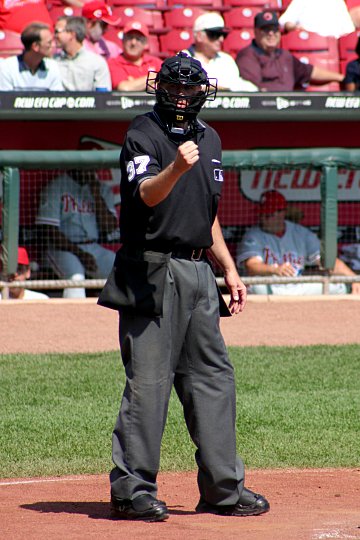
Umpires "do work."
This is one of the other issues raised by people. I myself had a brief stint of umpiring for a small K-12 kind of league. That experience, while brief and not always pleasant, gave me a new perspective on what umpires have to go through. They are involved in every single minute thing that happens on the field and they are asked to be perfect, and they are certainly close. I don't know how much the umpires are getting paid in the Major Leagues, but I doubt it's what they deserve. With that said, there are certainly some who can create some concern for this statement, but I don't think either Jim Joyce or Jerry Meals is one of them.
I learned how umpires get into position to make the numerous and difficult calls that they do, and I experienced having to make those calls in a split second. You have to go with your gut and what you saw on the field. This really isn't any different than what officials do in other sports, except the number and sometimes severity of the calls are far greater in baseball.
Some people are calling for Bud Selig to suspend umpires for missing calls similar to Jerry Meals's call. This is ridiculous. Not only for the reasons I cited above, but because there is no intent on the umpire's part to cause harm or "screw somebody over." That just doesn't make sense. And I hope that people are joking when they question whether Meals had somewhere to be at 2 A.M. or that he had money riding on the game. I'm not naive enough to think that officials betting on games isn't a possibility, but it doesn't make much sense. While they may have the rare ability to affect the outcome of a game, like in the cases mentioned above, there are way to many variable for them to risk their jobs over it. I don't know how much money they would expect to get from the bet, but I doubt it's worth not only the money from their job but also the enjoyment and satisfaction that they get from doing it.
Replay
This is NOT what we need.
This has been a hot button topic for a couple of years now, and quite frankly I don't entirely like the home run replay already in affect. Part of the reason is that we still don't always get a definitive answer even when we do have replay. Replay was used yesterday in the Cardinals vs. Astros game. Albert Pujols hit a ball that hit the top of the padded wall and then bounced off the concrete behind it to count for home run. It's not entirely clear whether this was the case, but the umpires stuck with their original call that it was a home run.
The point can be argued either way, but in the end it was not indisputable evidence to be overturned. That's a term that I like. I'm not sure if it applies to Major League Baseball's rule for replay, but the Nation Football League has that right. If it can't be overturned by video evidence then it shouldn't be. The initial call should stick if it can't be seen as wrong. Innocent until proven guilty ring any bells? Same idea here. The umpires can't be wrong until they are proven wrong.
Umpires try to get the play right.
As I mentioned before, umpires are right a whole lot more than they are wrong. So, shouldn't we give them the benefit of the doubt? However, replay is already done for home runs. That probably won't change. However, I'm hesitant to give replay over to plays at the plate and the like. The premise is similar to the home run, each call is the difference between runs being scored or not, but the same issues still exist as to whether it's truly helping to get the call right. Which I understand. Getting the call right is important and good, but I'm perfectly fine with the umpires having a quick meeting to get each other's thoughts and that's it. (An underused privilege by MLB umpires in my opinion)
However, this is a human game that's played, coached, managed, called, officiated, and bought for by humans. I'd prefer to keep it that way.