My photo
I love sports. Sometimes I have things that I just need to say or have on my mind. This is where I try and put those thoughts into words. Please read and enjoy!
Showing posts with label Sports. Show all posts

Saturday, October 8, 2011

Paid to Play?

Eric Dickerson and Craig James were members of
the SMU team that almost lost it all.

The last thing I talked about what was whether those gifted with athletic ability should attend college or jump right into professional play. Much of my argument was for the different kinds of education that the athlete will receive in college both in the books and in life.

You Want 500 Dolla?

But what about when an athlete makes that decision to take his talents to the college level? Recently the idea of paying these athletes has become a popular topic. To me, this is absurd. If you really want to get paid then go pro. Otherwise, get your education and be happy.

That basically sums up what I'm about to talk about further. I've already mentioned that the reason someone goes to college, or what the reason should be, is to get an education. This is something that seems to have been forgotten, not only recently but for years. It's a common joke about athletes that cruise through school on their talent and not their brains, and jokes are almost always based on truth.

Terrelle Pryor has been in the center of
 much of the controversy at Ohio State.
But something more concrete has come to light in more recent years. Further back were the incidents at Southern Methodist University where players were played under the table and the university almost lost it's football program due to the severity. More recent issues have been found at Ohio State and Miami University. All of these have shown instances where money and benefits for players became more pivotal than their education.

The NCAA has handed out suspensions and penalties in each of these instances, and that is certainly a good thing to see. I don't necessarily agree with the NCAA all the time, but this is an important thing to happen. Some might say that it is their job, but it's still good to see. Unfortunately, these penalties probably won't change the mindset about college athletics and its athletes.

Most will shrug off these penalties and maybe make some small changes to their programs, but that won't change the big picture. These kinds of deals will continue to go on even after the NCAA is done, simply because the ideals have not changed.

I'm not going to pretend to have the answers, just an understanding of the problem. The true question is not about whether college athletes should be paid, but rather if we should acknowledge that we pay them. Players receive benefits and money all the time, but schools aren't willing to acknowledge it.

Of course, scholarships are one form of payment that NCAA is okay with, and I'm not against it either. Do athletes dedicate more of their free time than most students? Possibly, depending on your thoughts of the "joke" I mentioned earlier. If you don't buy the joke, then these players have the same school work as the rest of us but add all of their athletic obligations on top of that work.

If this is the case, and many would believe it's so, then there is absolutely no reason that some athletes shouldn't be allowed some sort of compensation for their time and representing their respective schools. However, beyond this basic compensation is where the issue begins.

The point of college is education. That is priority one. Some athletes believe that they are special and deserve special privileges, and schools oblige because they are afraid to lose the athlete.

This concern by the schools stems from universities being more business than education. Schools have become more concerned with image and filling seats for a game rather than graduation.

Blame doesn't sit with any one group. Athletes, schools, and even fans need to collaborate to change how we think about college athletics. Then the conversation of whether athletes should be paid wouldn't even be necessary. College is for education. If you want to get paid, go pro.

Friday, September 23, 2011

College or Career?

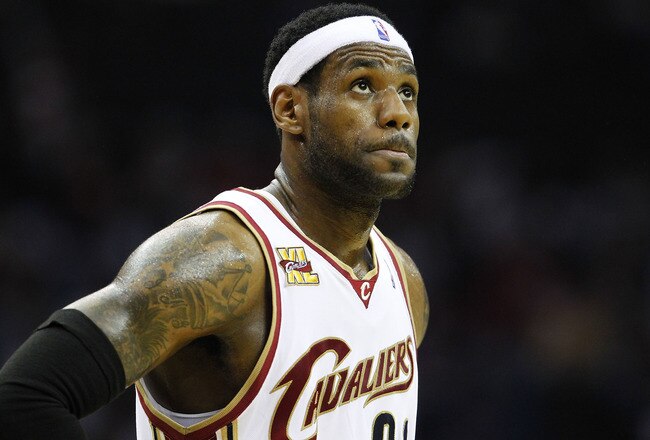
Gregory Shamus/Getty Images
Speaking with a friend the other day, we were on the topic of LeBron James and we got onto the topic of whether athletes should jump right into a professional career or take their talents to college. This, of course, has been a topic in athletics for years now, and is a part of the debate for paying college athletes which I'll discuss at a later date.


Check Yourself...

Let's start with going to college. What are the advantages to going to college? There are quite a few. The first is what most seem to forget when discussing college athletics, education. Most people go to college to get an education that will help them be better prepared for the rest of their lives. And I'm not just talking about those boring elective classes that teach you how to grind through long, boring meetings that seem to drag on forever. What I'm more concerned with are the lessons learned that have an impact on the everyday.

In college, you understand that you are part of a bigger picture of things. Whether that is because your university is literally bigger than you or because you realize the importance of teamwork and working with others. You meet a number of characters in college and each presents you with the opportunity to learn how to handle different people. YOU GROW UP!

Now, I don't want this to be simply a Lebron bashing, because that's a band wagon that's easily ridden, but also because I don't have a huge problem with the man himself. He's made some bad "decisions" this year and beyond, but he is still a nice guy with a ton of talent.
Some call Bryce Harper "The Chosen One." Chosen to do what?

Basketball is not the only sport with this problem, Baseball might be even worse about the number of kids that sign with teams right out of high school, or at least at a young age. The Washington Nationals Bryce Harper is an example of this point.


In my mind, both he and James are still kids that still thinks that the world revolves around them and they can get away with what they want. Harper has already been ejected from a number of games in his brief minor league career, and how it happens just demonstrates how much of grown up he has become. His antics don't always get him ejected but they are bad just the same. Whether it's drawing lines in the dirt, spiking his helmet, rushing the approaching dugout, or blowing the apposing pitcher a kiss, Harper still thinks that just because he signed the big contract that he is a big deal.


Harper hasn't even proven that he can play in the big leagues yet, and James chokes under playoff pressure. I don't think there is any doubt that both of these guys are tremendous athletes, but there comes a point where you need to bear down and just do your job.


It's certainly painful, but do they always recover?


But let's pretend that an athlete is not full of themselves and won't get the billion dollar contract. Why should they go to college? The same reasons still apply, because no one graduates high school fully mature. In addition, let's look at the assurance of athletics: none. An athlete can brake their leg or tear a tendon or any number of injuries. If nothing else, injuries can diminish an athletes skills if not completely end their career, and this can happen in an instant at any time. This is the danger of sports, and what do the athletes have after that? Some get into broadcasting, which is hit or miss, but otherwise they can fall off the face of the earth.

A sports career can last, typically, 10-20 years at best, and then they live off their name. But if you don't end up making a name for yourself then you are back to square one. A college education is something that lasts a lifetime and will always leave options in the future. It's just a safe bet and makes sense.

The biggest potential wrench for an athlete becomes affording for college. Some institutions provide full-rides for athletes, but not all do and not all athletes get them. Money is a big player in athletics, and college athletics is no exception. But that's for another time.

Like I said, I know these aren't the only two guys, and I also know that college isn't a complete fix. Some have attended college but still have issues. And there are those who haven't gone to college, have a ton of talent, and still have respect for the the game and their opponents. Atlanta Brave's Jason Heyward is the first to come to mind. He's playing for a contending team and has been a pretty good addition for them.

However, when it comes down to it college is a valuable asset to anyone, and athletes need an education as well. They need to learn how to handle relationships. They need to learn how to handle being on their own. They need to learn how handle life "in the real world," where the world is bigger than them.

Friday, September 9, 2011

What’s "Professional" In Sports?


Has professional sports lost something in recent years, is it fading away, or is it simply not the norm any more?

How athletes and coaches act nowadays has become a farce of what it was once. Showboating and smack talk have become part of sports whether we like it or not. However, there are some things that are hard to put into words but you know are just plain no-no’s.

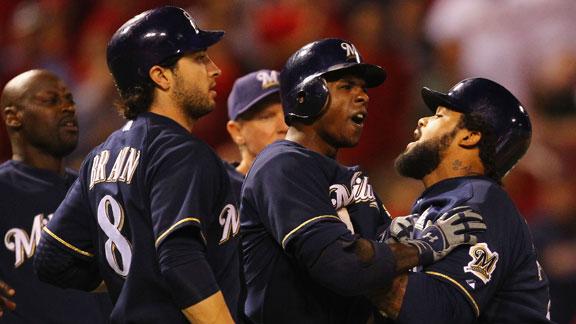
Nyjer Morgan (center) being held back by
teammate Prince Fielder (right)
The recent spat caused by Milwaukee outfielder Nyjer Morgan, or Tony Plush or whatever personality decides to drop in, is just a recent example of some of the unprofessionalism in sports today.


Morgan has had a reputation for getting into trouble, most notably last season when he was suspended for 8 games for a number of incidents as a member of the Washington Nationals.

Those incidents, unfortunately, seemed to typify Morgan’s behavior during play, but his actions beyond play are not much better. His public disagreement with his manager would be an example.

For a long time this season it appeared as if Morgan was beginning to change some of his ways. However, that ended this week with the incident against the Cardinals.

According to Chris Carpenter, Morgan had been running his mouth for the past couple of days.

"Every time, every time. When he hit that double he was screaming," Carpenter told MLB.com, referring to a hit earlier in the game. "Yesterday he screamed, a couple days ago when he hit that ... Which I don't mind. Do whatever you want. But when you strike out like that and try to throw the chew (at) the mound to our pitcher and yell? Come on, man. You need to be more professional than that."

In the video, Carpenter had a chance to say two words at most before he turned around. So, in Nyjer Morgan’s mind, his couple of days of mouthing off wasn’t as bad as Carpenter’s two words?
In an interview after the game, Morgan didn’t seem to think that he could be at fault for any reason. But if what Carpenter said is true, then how could he think that? That is unless his actions are becoming the norm of sports.

This would be an unfortunate turn for sports to take. It’s one thing to be competitive, but it is another thing entirely to be a nuisance or conceited.

For instance, I don’t mind barreling into a catcher as long as it necessary and it’s the only way to get to the plate. However, running your mouth every time that you do something just lacks class.

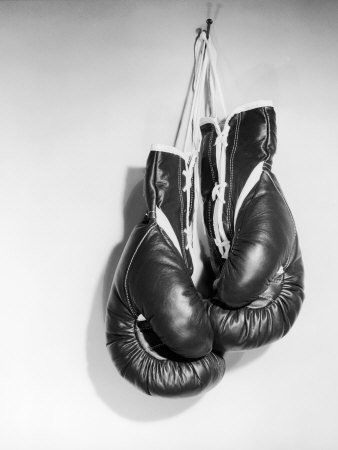
Trust me, Nyjer. You wouldn't
want Albert in the ring.
Morgan also extends his personalities past the diamond. He does have his own twitter account, which some might find entertaining, but sometimes it’s misused. An example would be his comments about Albert Pujols after the altercation the other night.

"Alberta couldn't see Plush if she had her gloves on!!! Wat was she thinking running afta Plush!!! She never been n tha ring!!!"

I’m sorry but let’s look at this practically standpoint. Albert has 3 inches and nearly 60 pounds on Nyjer! Not to mention that most of that difference is muscle. I’m not boxing expert, but I’d say that the chances fall in Pujols’s favor.

Now let’s compare what they’ve done in their careers, to see who “deserves” to smack talk. Pujols has a .328 career average versus Morgan’s .289 average. Morgan has 8 career home runs. Pujols hits 8 home runs in a month. Pujols has 3 MVP Awards, while Morgan has none. Pujols has a World Series ring, and Morgan, apparently, has been in a boxing ring.

So, I think it’s safe to say “What were YOU thinking?” Fortunately, for Morgan, he’s picking a fight with a guy who is least likely to retaliate. Albert will let his bat and baseball glove do the talking for him, rather than get in twitter fight with “Tony Plush.”

Morgan also seems to lack an ability to be humble. So, when he’s on a team that actually can win games and go to the playoffs, something his former teams were unable to do, he feels the need to boast about it. In the interview after the game, he brushes off his behavior on the fact that the Brewers are in first place. His personal sense of superiority absolves him any problems that come up.

Nyjer Morgan is certainly not the only player in baseball, or sports in general, that acts this way, but it’s unfortunate that we even have to talk about these guys.

The true professionals are the ones who let their play do the talking. Those who only know how to bark loudly are the ones that should be heard the least. Both Pujols and Carpenter have handled this better than Morgan, and they are far better than I in allowing some leeway for Morgan's shortcomings.


I don’t know if this is a surging trend among athletes or if it’s an unfortunate smear in our era of sports.
Either way let’s hope that these bad habits won’t continue into the next generation of professional athletes.